
Guide
What to Check in a Copier Agreement
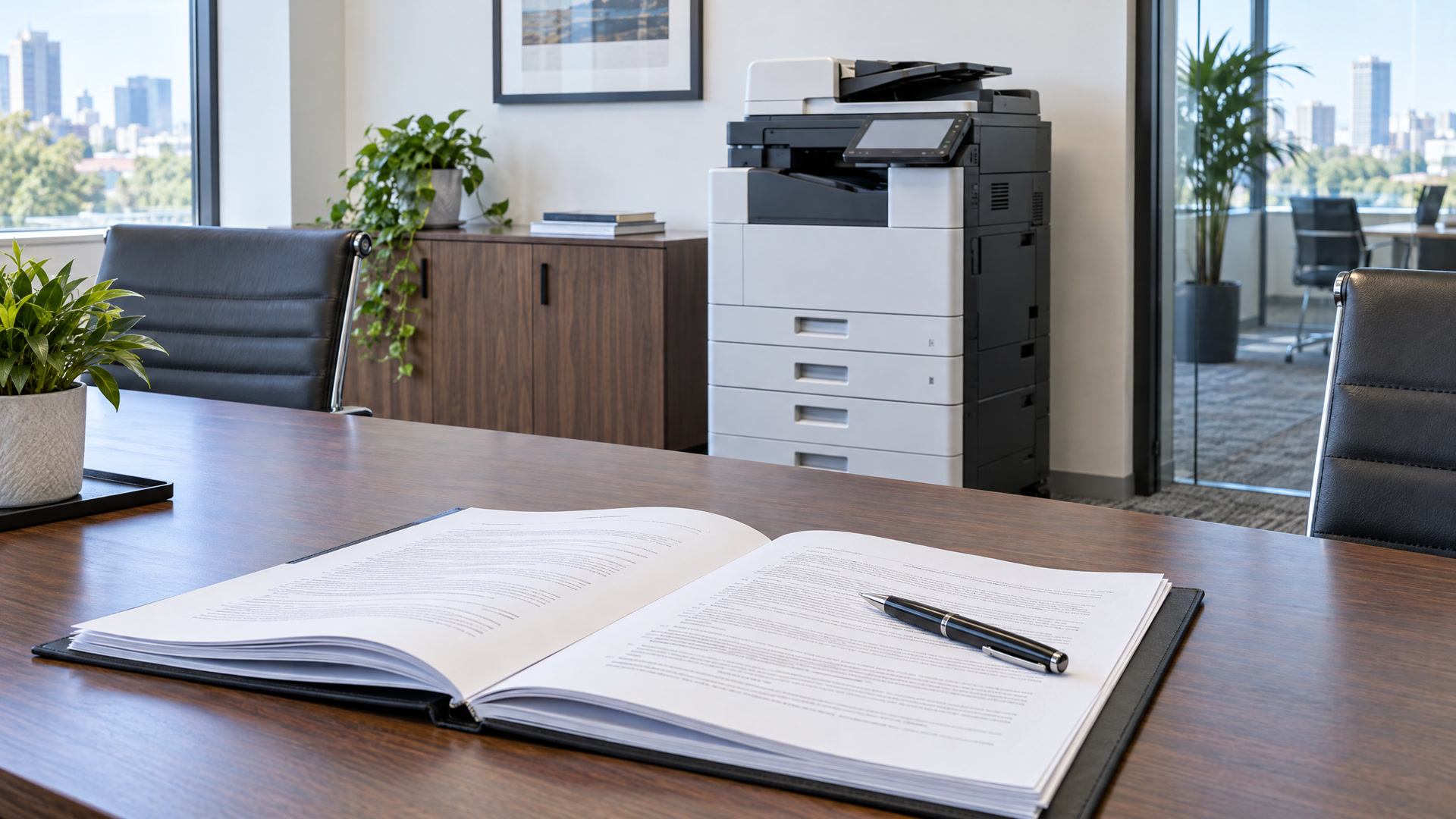
A copier agreement looks simple on the first page: a monthly price, a machine, and a promise that someone will show up when it breaks. The surprises live further down, in how pages are counted and what “service” leaves out.
You do not need to become a contract lawyer. You do need answers to a short list before the paperwork is signed. Offices across East Greenwich and Southern New England that stay happy with their copiers asked about service, meters and the end of the term before the machine rolled in.
Service that matches the way you work
Ask what happens on the morning the copier will not scan, and you have a packet due at noon.
- Who answers the phone, and is that person local?
- Is the response measured in hours or in “next business day”?
- Are parts, labor and a loaner included, or only the trip charge?
- What happens if the machine is down for more than a couple of days?
What good looks like. A real person answers during business hours. On-site response is stated in plain language, not buried under “best effort.” Parts and labor for covered failures are in the plan, not itemized after every visit. Someone tells you what happens if the machine cannot be fixed on the first trip.
A low monthly number that excludes toner, staples or after-hours calls is not a low number. Add those lines back in before you compare two quotes.
At New England Business Solutions, service is framed as same-day and next-day on-site across Southern New England. Technicians carry common parts in their trucks, many repairs finish on the first visit, and we run test pages before we leave. Hold any agreement to that same clarity.
Supplies and the meter
Most copier plans bill a base amount plus a rate for every page. Read how a page is defined.
- Is color a different rate from black and white?
- Do scans count? Large copies? Duplex (both sides)?
- Is there a minimum number of pages you pay for even in a quiet month?
- Who supplies toner, and is it included or billed when you call?
Meter examples that trip people up. Counting every side of a two-sided packet as a separate page can double a busy week’s bill. A color rate that applies whenever any color appears turns a black contract with a blue logo into a color page. A monthly minimum means you pay for pages you did not print in a slow month. None of those terms are rare. They are easy to miss on a first read.
Supply examples that trip people up. “Supplies included” sometimes means toner only, with staples, drums or waste bottles billed separately. If you must buy supplies from one place, check that price against what you pay today. A “free” copier that locks you into expensive toner is a toner contract with a machine attached.
What good looks like. Black and color rates are clear. You know whether duplex counts as one page or two. Minimums, if any, match a quiet month in your real history. Toner is either included and automatic, or priced in a way you can verify before you sign.
The end of the term
Look at the last page, not just the signature line.
- How many months is the term, and does it renew on its own?
- What does it cost to leave early?
- Who owns the machine when the term ends?
- Can you keep your address book and scan settings if you switch?
What good looks like. Auto-renewal is disclosed, with a notice window you can actually use. Early-exit costs are a number, not a formula. Ownership at the end is clear: return, purchase option, or you already own it. Moving scan destinations and address books off the device is part of the exit plan, not an afterthought when the truck arrives.
Bring the real volume
The right machine is the one that fits last quarter’s printing, not the busiest week you can remember. Pull a meter reading or a supply order history before the meeting. A copier sized for a print shop will sit underused and still bill you. A desktop unit asked to be the whole office will spend its life in the shop.
Bring three numbers if you can: average monthly black pages, average monthly color pages, and how often the current machine needed service last year. Those three beat any sales demo.
How common gotchas map to clearer options
Once you see where agreements go sideways, it helps to know what a cleaner structure looks like.
Service and supplies feel bolted on. Managed print starts with a free assessment, works with equipment you already own, delivers toner automatically, includes service and repairs, and bills one monthly invoice. No long-term contract is required. If the pain is chasing cartridges and repair tickets, this is often the fix.
You need a machine but do not want a multi-year lease. The No Catch Printer Plan places a brand-new printer or multifunction device in a qualifying office at zero upfront cost, with no lease and no credit check. You source supplies through us. Maintenance and support are part of the plan.
You want a Xerox multifunction on a small monthly number. Our $30 Copier Program puts a brand-new Xerox multifunction copier in a qualifying office for $30 per month, with toner, maintenance and support included when supplies come through us. No credit check and no long-term lease obligation. Compare that line by line with a lease that bills toner and maintenance separately.
You want to buy or lease a specific Xerox model. As an authorized Xerox channel partner, we can walk you through options across the Xerox lineup. The same checklist still applies: service, meters, supplies and the end of the term.
None of these remove the need to read the page. They do remove places where a vague “service included” line turns into an unexpected invoice.
Same-day and next-day on-site, in practice
An agreement is only as good as the visit when the copier fails. Ask any provider to explain response in the same words they will use when you call: same-day and next-day on-site across Southern New England, common parts on the truck, first-visit repairs when the part is in hand, test pages before the tech leaves.
Before you sign
New England Business Solutions writes copier plans for offices that want the service spelled out: toner, repairs, and a person you can call in Rhode Island. If you already have an agreement and something in it feels off, send us the page that worries you. We will tell you, in plain language, what it actually commits you to.
Call (401) 515-2011 or contact us. Bring a recent meter reading if you have one. Our office is at 776 Main St in East Greenwich, open Monday through Friday from 9:00 AM to 5:00 PM and Saturday from 10:00 AM to 4:00 PM.